
A Holistic Approach to Combatives Training
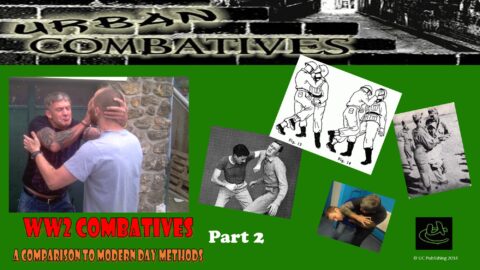
In this program we look at a comparison between the unarmed Combatives taught during the WW2 period compared to that of modern day Combative training.
Here We look at the kind of people that were learning for operational purposes and more importantly at some of the key figures that taught it during the war years.
For this we look to what was taught primarily in the UK and in the US. FROM THE British Commando /Auxiliary & s.o.e periods influenced by W.E. Fairbairn & E.A. Sykes.
To Dermot Pat O’Neil & John Jasper Styers of the US Army & US Marine Corp. WE also look AT THE Commonalties THAT Remain A CONSTANT TODAY FOR ANY WORTHY Combatives curriculum such as principle based methods, compressed curriculum and mentality driven emphasis.
Quite often the unarmed combat module of training constituted no more than 3 percent of the overall learning that some of these soldiers and operatives had to undertake, no more than a matter of hours, to learn something that could save your life or buy you time to get to a weapon before being sent to occupied territory where what you had learned ‘had to work’ or you wouldn't make it home!
This program is for historical study but also takes in to account the differing rules of engagement compared to today’s need for civilian self-protection and at what we have taken and continue to employ from the influence some of our close combat forefathers! enjoy UC 2014
Related Videos
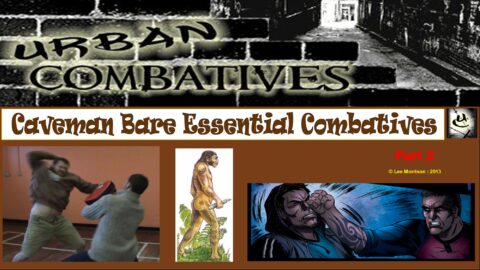
In this two disc program we strip back down to the ‘bare essential’ elements that make up a compressed curriculum that is efficient and functional for 21st century self protection .
My inspiration for this module came from working with a special military unit that had minimal time to train and what they learnt had to work in a hostile environment with minimal resources.
This got me thinking, if I was to adapt this program for the civilian environment for the average person who had neither the time, motivation or resources for consistent ‘Combatives training’ what are the ‘bare essential elements’ that I would give them? Here we strip down to the minimal elements that make any good method of Self Protection workable.
Driven by two soft skills, three hard skills, three principle based concepts, two secondary tools and a clear understanding of combative mentality; this caveman module offers immediate functionality to the recreational trainee as well as the more serious student.
Emphasis here is definitely on ‘less is more’ enjoy… uc 2013
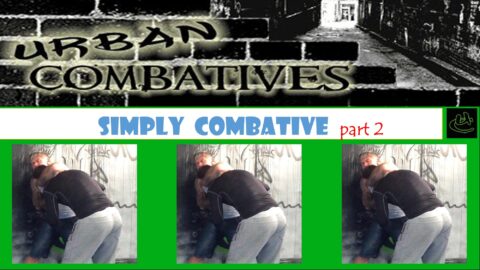
THIS TWO DISC PROGRAM OFFERS PLAIN AND SIMPLE COMBATIVE STRATERGIES AND PRINCIPLES FOR THE AVERAGE TRAINEE COMING INTO COMBATIVES TRAINING FOR THE VERY FIRST TIME, OR FOR THE MARTIAL ARTS OR COMBAT SPORT PRACTITIONER THAT WANTS TO KNOW HOW TO ADAPT THEIR GAME FOR A MORE REALITY BASED APPROACH. WHATS OFFERED HERE WILL SIMPLY DOVETAIL WITH WHAT YOU PRACTICE OR IF YOU COME TO THIS KIND OF TRAINING WITH AN EMPTY CUP, THEN THIS IS A GREAT STARTING PLACE ON ROUTE TO COMBATIVE FUNCTIONALITY.
HERE WE COVER EVERYTHING IN ONE PLACE FROM SOFT SKILLS, PERSONAL SECURITY, HARD SKILL TOOLS, ‘BLITZKRIEG’ CONTINUOUS ATTACK PRINCIPLES, SECONDARY WEAPONS FROM EXTREME CLOSE QUARTERS AND CONFINEMENT, COMBATIVE PRINCIPLES AND CONCEPTS, IMPROVISED WEAPONS OF OPPORTUNITY, USING DECEPTION AND SYNTHETIC ALLIES AND MUCH, MUCH MORE! NOTHING MORE REALLY NEEDS TO BE SAID. THIS PROGRAM IS IDEAL FOR NOVICE, INTERMEDIATE AND ADVANCED TRAINEES ALIKE. ENJOY UC 2015
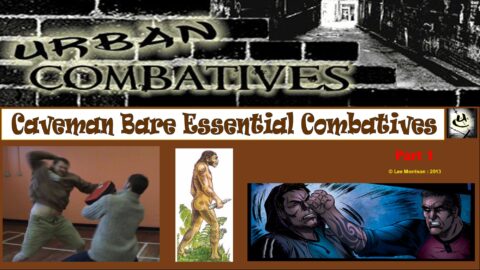
In this two disc program we strip back down to the ‘bare essential’ elements that make up a compressed curriculum that is efficient and functional for 21st century self protection .
My inspiration for this module came from working with a special military unit that had minimal time to train and what they learnt had to work in a hostile environment with minimal resources.
This got me thinking, if I was to adapt this program for the civilian environment for the average person who had neither the time, motivation or resources for consistent ‘Combatives training’ what are the ‘bare essential elements’ that I would give them? Here we strip down to the minimal elements that make any good method of Self Protection workable.
Driven by two soft skills, three hard skills, three principle based concepts, two secondary tools and a clear understanding of combative mentality; this caveman module offers immediate functionality to the recreational trainee as well as the more serious student.
Emphasis here is definitely on ‘less is more’ enjoy… uc 2013
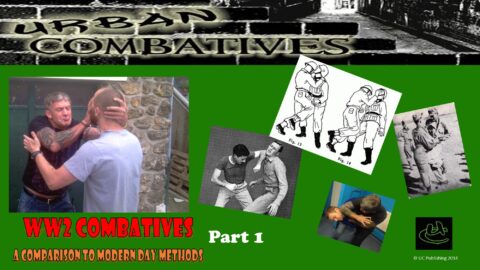
In this program we look at a comparison between the unarmed Combatives taught during the WW2 period compared to that of modern day Combative training.
Here We look at the kind of people that were learning for operational purposes and more importantly at some of the key figures that taught it during the war years.
For this we look to what was taught primarily in the UK and in the US. FROM THE British Commando /Auxiliary & s.o.e periods influenced by W.E. Fairbairn & E.A. Sykes.
To Dermot Pat O’Neil & John Jasper Styers of the US Army & US Marine Corp. WE also look AT THE Commonalties THAT Remain A CONSTANT TODAY FOR ANY WORTHY Combatives curriculum such as principle based methods, compressed curriculum and mentality driven emphasis.
Quite often the unarmed combat module of training constituted no more than 3 percent of the overall learning that some of these soldiers and operatives had to undertake, no more than a matter of hours, to learn something that could save your life or buy you time to get to a weapon before being sent to occupied territory where what you had learned ‘had to work’ or you wouldn't make it home!
This program is for historical study but also takes in to account the differing rules of engagement compared to today’s need for civilian self-protection and at what we have taken and continue to employ from the influence some of our close combat forefathers! enjoy UC 2014