
Dealing with an active threat part 2

Related Videos
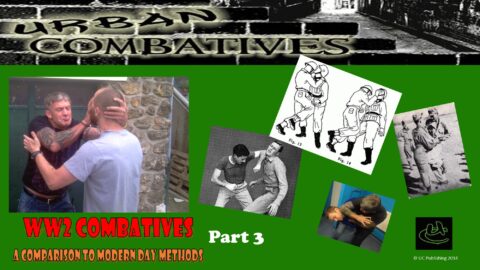
In this program we look at a comparison between the unarmed Combatives taught during the WW2 period compared to that of modern day Combative training.
Here We look at the kind of people that were learning for operational purposes and more importantly at some of the key figures that taught it during the war years.
For this we look to what was taught primarily in the UK and in the US. FROM THE British Commando /Auxiliary & s.o.e periods influenced by W.E. Fairbairn & E.A. Sykes.
To Dermot Pat O’Neil & John Jasper Styers of the US Army & US Marine Corp. WE also look AT THE Commonalties THAT Remain A CONSTANT TODAY FOR ANY WORTHY Combatives curriculum such as principle based methods, compressed curriculum and mentality driven emphasis.
Quite often the unarmed combat module of training constituted no more than 3 percent of the overall learning that some of these soldiers and operatives had to undertake, no more than a matter of hours, to learn something that could save your life or buy you time to get to a weapon before being sent to occupied territory where what you had learned ‘had to work’ or you wouldn't make it home!
This program is for historical study but also takes in to account the differing rules of engagement compared to today’s need for civilian self-protection and at what we have taken and continue to employ from the influence some of our close combat forefathers! enjoy UC 2014
Outside of the more Combative or Reality based systems available, the most neglected aspect in the Martial Arts, Combative Sport and mainstream Self-defence relate to the mental aspect of any potentially violent confrontation.
The two main areas within this context relate to; Fear Control and the cultivation of a Combative Mentality or Mindset.
Part two of this series takes the viewer into the realms of State Access in regards to cultivating the most resourceful mental state over the full spectrum of a violent confrontation; where you need to be mentally and physically pre-fight, during the event (conflict phase) and just as importantly, post-fight after the event.
We go on to look at State Management in relation to learning to control fear, adrenaline pain, fatigue and aggression incorporating advice and influence from some of the best Combative instructors in the world along with conclusions gained from my own intense study, training and experience of this subject. Filmed during one of our UC workshops, we incorporate practical drills, in both design and application that give demonsratable feedback in an immediate sense. This 2-part series will benefit anyone interested in managing stress relating to violent confrontation and is recommended for students and instructors alike.
WARNING: this program contains profanity, scenes of violence & aggression.