
Videos
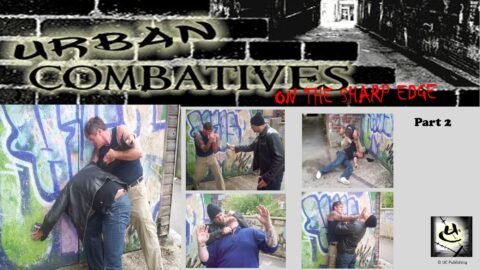
If we take a look into current UK statistics relating to knife crime, we can see that the equation is made up of multiple variables. Starting with youth or yob culture, it is clear that within the last 2 decades young people have become a lot more de-sensitised to violence in general, so much so that incidents of both knife carry as well as knife violence have been seen in youths from as young as 11 right through teenage years and beyond. In addition to this is the influx of multi-cultural society in the UK with people from all over the world, coming to the UK to live and work.
All of whom come with their own ideas and beliefs regarding what’s acceptable in terms of violence, which has been seen time and again, to include knife carry and usage as a cultural acceptance. Add to this, incidents of domestic and gratuitous knife violence often fuelled by alcohol, drugs and metal illness and you can see how a large percentage of reported violent offences in the UK have involved some kind of edged weapon. Such statistics have shown this to be the case to such a degree, that during any potentially violent confrontation we should expect a weapon and/or an accomplice.
Current UK laws are under review (with a view to imposing much harsher penalties for those caught carrying a knife) since the recent current boom of knife related tragedies such events have triggered frequent knife amnesties all over the UK, where knives and weapons of all kinds could be handed into any police station across the Country with no questions asked, in an attempt to get them off the streets. But the solid fact remains that its not knives and similar sharp items that are the problem. Any and all such things are simply tools, place even the most ferocious looking knife into a draw for a hundred years and it won’t hurt anyone. It is an individual’s INTENTION to harm another that turns that tool into a weapon and no amount of amnesties or random searches will take away INTENTION.
If intention is present then you could wreak havoc with a pencil, a piece of ripped tin or a shard of glass. “On the sharp edge’’ makes no bones about the fact that no one system of martial art or Combatives holds all the answers, in terms of a fail safe method of dealing with a knife unarmed! What it does offer is education and a heightened awareness to the problem.
In addition to this, it offers a logical physical response borne from live experience and the acid test of stress training. This programme is presented in a progressive and workable format and is intended for use in conjunction with and active training programme. You have no business attempting such physicality's lightly without tenacious practice, unless out of an act of sheer desperation!”
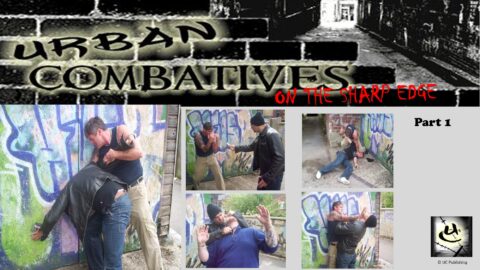
If we take a look into current UK statistics relating to knife crime, we can see that the equation is made up of multiple variables. Starting with youth or yob culture, it is clear that within the last 2 decades young people have become a lot more de-sensitised to violence in general, so much so that incidents of both knife carry as well as knife violence have been seen in youths from as young as 11 right through teenage years and beyond. In addition to this is the influx of multi-cultural society in the UK with people from all over the world, coming to the UK to live and work.
All of whom come with their own ideas and beliefs regarding what’s acceptable in terms of violence, which has been seen time and again, to include knife carry and usage as a cultural acceptance. Add to this, incidents of domestic and gratuitous knife violence often fuelled by alcohol, drugs and metal illness and you can see how a large percentage of reported violent offences in the UK have involved some kind of edged weapon. Such statistics have shown this to be the case to such a degree, that during any potentially violent confrontation we should expect a weapon and/or an accomplice.
Current UK laws are under review (with a view to imposing much harsher penalties for those caught carrying a knife) since the recent current boom of knife related tragedies such events have triggered frequent knife amnesties all over the UK, where knives and weapons of all kinds could be handed into any police station across the Country with no questions asked, in an attempt to get them off the streets. But the solid fact remains that its not knives and similar sharp items that are the problem. Any and all such things are simply tools, place even the most ferocious looking knife into a draw for a hundred years and it won’t hurt anyone. It is an individual’s INTENTION to harm another that turns that tool into a weapon and no amount of amnesties or random searches will take away INTENTION.
If intention is present then you could wreak havoc with a pencil, a piece of ripped tin or a shard of glass. “On the sharp edge’’ makes no bones about the fact that no one system of martial art or Combatives holds all the answers, in terms of a fail safe method of dealing with a knife unarmed! What it does offer is education and a heightened awareness to the problem.
In addition to this, it offers a logical physical response borne from live experience and the acid test of stress training. This programme is presented in a progressive and workable format and is intended for use in conjunction with and active training programme. You have no business attempting such physicality's lightly without tenacious practice, unless out of an act of sheer desperation!”
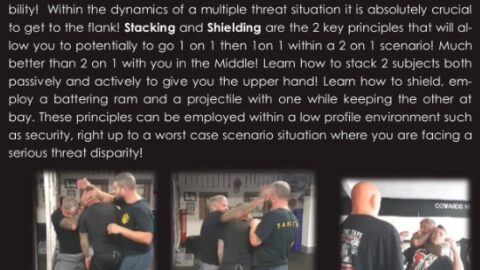
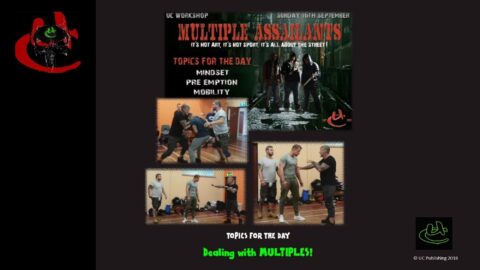
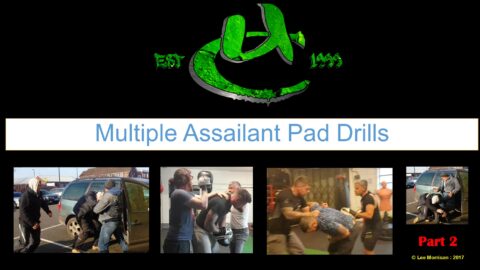
This 2 Disc Program takes an in-depth look at how we can train for dealing with a 2 on 1 Multiple Assailant Scenario with Safety but whilst Maintaining Dynamic, Non-Compliant Energy! Here we analyse all of the things that could Potentially go wrong if our initial Pre-emptive Action wasn’t Enough!
The 3 Key Principles that will allow you to Prevail in such are a Scenario; are MINDSET-Pre-Emption & Tactical Mobility. Here we will look at how to Employ the Principles of Stacking & Shielding, both essential when dealing with more than one Subject!
Look at these Pad drills, that integrate Partner to Pad cross-over, as a Bridge to Kitted Simulation Training. Static Pad drills inside of Combatives Training are a thing of the past! This kind of Training will take you into a NEW & Advanced method of Training.
All you need is Partners & Pads! Enjoy UC 2017
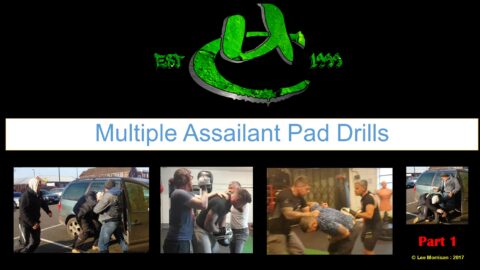
This 2 Disc Program takes an in-depth look at how we can train for dealing with a 2 on 1 Multiple Assailant Scenario with Safety but whilst Maintaining Dynamic, Non-Compliant Energy! Here we analyse all of the things that could Potentially go wrong if our initial Pre-emptive Action wasn’t Enough!
The 3 Key Principles that will allow you to Prevail in such are a Scenario; are MINDSET-Pre-Emption & Tactical Mobility. Here we will look at how to Employ the Principles of Stacking & Shielding, both essential when dealing with more than one Subject!
Look at these Pad drills, that integrate Partner to Pad cross-over, as a Bridge to Kitted Simulation Training. Static Pad drills inside of Combatives Training are a thing of the past! This kind of Training will take you into a NEW & Advanced method of Training.
All you need is Partners & Pads! Enjoy UC 2017
Introduction
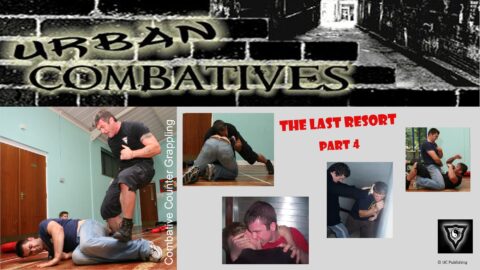
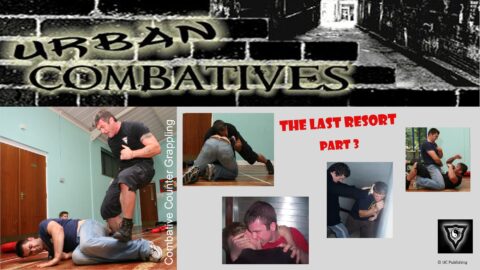
Grappling in any ‘’live’’ situation is really last resort stuff; the priority if avoidance and escape is not an option, is pre-emptive action via ballistic impact. If you have ended up on the ground then a mistake has been made and you will have to make the best out of a bad situation and quickly. The priority is to hurt your combative subject and get back to your feet as soon as you can.
Combative Counter Grappling
An Introduction to Counter Grappling (a last resort)
Secondary tools from ECQ
Restricted striking
Biting and gouging
Ballistic manipulations
Use of the environment
Counter grappling/vertical
Dealing with common grabs/holds
Countering Tackle
Counter grappling/horizontal
Passing the guard/street style
Attacking from the pins
Weapon access & deployment from ECQ
And Much More On This DVD
Introduction
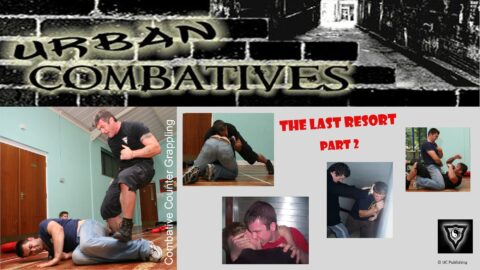
Grappling in any ‘’live’’ situation is really last resort stuff; the priority if avoidance and escape is not an option, is pre-emptive action via ballistic impact. If you have ended up on the ground then a mistake has been made and you will have to make the best out of a bad situation and quickly. The priority is to hurt your combative subject and get back to your feet as soon as you can.
Combative Counter Grappling
An Introduction to Counter Grappling (a last resort)
Secondary tools from ECQ
Restricted striking
Biting and gouging
Ballistic manipulations
Use of the environment
Counter grappling/vertical
Dealing with common grabs/holds
Countering Tackle
Counter grappling/horizontal
Passing the guard/street style
Attacking from the pins
Weapon access & deployment from ECQ
And Much More On This DVD
Introduction
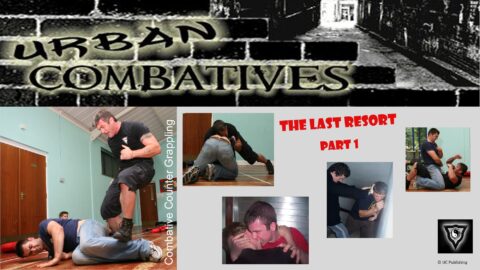
Grappling in any ‘’live’’ situation is really last resort stuff; the priority if avoidance and escape is not an option, is pre-emptive action via ballistic impact. If you have ended up on the ground then a mistake has been made and you will have to make the best out of a bad situation and quickly. The priority is to hurt your combative subject and get back to your feet as soon as you can.
Combative Counter Grappling
An Introduction to Counter Grappling (a last resort)
Secondary tools from ECQ
Restricted striking
Biting and gouging
Ballistic manipulations
Use of the environment
Counter grappling/vertical
Dealing with common grabs/holds
Countering Tackle
Counter grappling/horizontal
Passing the guard/street style
Attacking from the pins
Weapon access & deployment from ECQ
And Much More On This DVD
Introduction
Grappling in any ‘’live’’ situation is really last resort stuff; the priority if avoidance and escape is not an option, is pre-emptive action via ballistic impact. If you have ended up on the ground then a mistake has been made and you will have to make the best out of a bad situation and quickly. The priority is to hurt your combative subject and get back to your feet as soon as you can.
Combative Counter Grappling
An Introduction to Counter Grappling (a last resort)
Secondary tools from ECQ
Restricted striking
Biting and gouging
Ballistic manipulations
Use of the environment
Counter grappling/vertical
Dealing with common grabs/holds
Countering Tackle
Counter grappling/horizontal
Passing the guard/street style
Attacking from the pins
Weapon access & deployment from ECQ
And Much More On This DVD
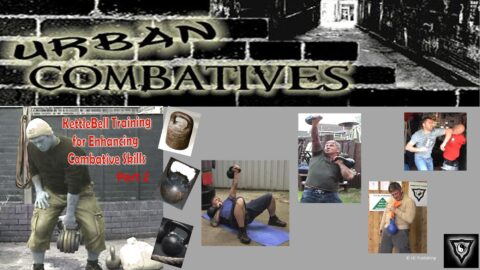
In this two disc program we take an in-depth look at how we can employ Kettlebells for cross training our Combative attributes.
Anyone familiar with the Strength & Conditioning aspect of UC via Com-Fit, will know that any piece of KIT is merely a means to an end, it is Concepts & Principles that drive any good objective, the KIT we employ is secondary to that all day long. With that said the humble Kettlebell has come back into vogue over the last decade and is employed by nearly every Combat Athlete that has ever entered the cage or laid his back to the mat and for good reason, they work! Their history is long and interesting, from its early ancestor the Stone Padlock which was employed by martial artists for Centuries throughout China, Okinawa and Asia.
To the early block weights and Kettlebells of the Vaudeville Strong Men of the early 1900’s and not forgetting of course their association with the Russian Military as the training tool of choice.
The benefits of KB training have been touted by many for a long time now, particularly for the Combat Athlete which of course translates to the Street Combatives Trainee. Here we look at the main benefits to those training in Combatives, primarily the Synergistic effect that KB training has on the body and how this translates well to the Task-Specific action of Striking and Controlling a non-compliant subject on a ballistically explosive level.
We look at the Plyometric benefits of KB training keeping in line with the objective of connecting our feet to our hands via the explosive synergy that we can apply to our kinetic chain when employing any Hard-Skill.
We also look at the use of KB’s for Strength & Conditioning protocols, Strength & Power Endurance and also for Pre/Rehabilitation of shoulder injuries so common to the Combat athlete. Finally we look at specific ways in which we can integrate KB training with our primary Combative Hard Skills on Impact KIT...Enjoy UC publishing 2011
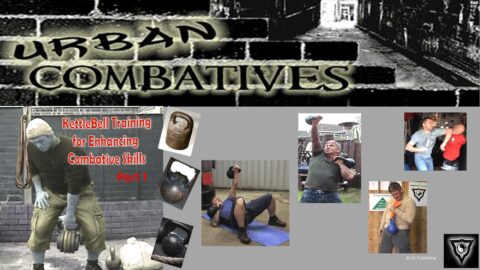
In this two disc program we take an in-depth look at how we can employ Kettlebells for cross training our Combative attributes.
Anyone familiar with the Strength & Conditioning aspect of UC via Com-Fit, will know that any piece of KIT is merely a means to an end, it is Concepts & Principles that drive any good objective, the KIT we employ is secondary to that all day long. With that said the humble Kettlebell has come back into vogue over the last decade and is employed by nearly every Combat Athlete that has ever entered the cage or laid his back to the mat and for good reason, they work! Their history is long and interesting, from its early ancestor the Stone Padlock which was employed by martial artists for Centuries throughout China, Okinawa and Asia.
To the early block weights and Kettlebells of the Vaudeville Strong Men of the early 1900’s and not forgetting of course their association with the Russian Military as the training tool of choice.
The benefits of KB training have been touted by many for a long time now, particularly for the Combat Athlete which of course translates to the Street Combatives Trainee. Here we look at the main benefits to those training in Combatives, primarily the Synergistic effect that KB training has on the body and how this translates well to the Task-Specific action of Striking and Controlling a non-compliant subject on a ballistically explosive level.
We look at the Plyometric benefits of KB training keeping in line with the objective of connecting our feet to our hands via the explosive synergy that we can apply to our kinetic chain when employing any Hard-Skill.
We also look at the use of KB’s for Strength & Conditioning protocols, Strength & Power Endurance and also for Pre/Rehabilitation of shoulder injuries so common to the Combat athlete. Finally we look at specific ways in which we can integrate KB training with our primary Combative Hard Skills on Impact KIT...Enjoy UC publishing 2011