UC Game Plan

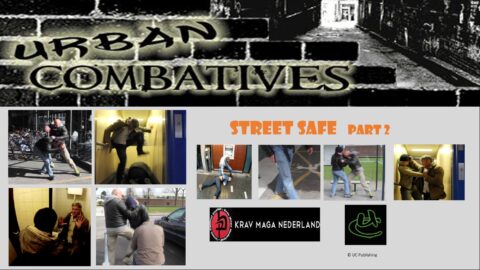
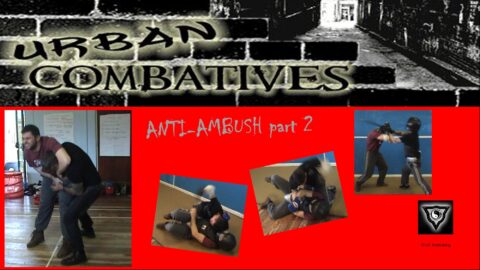
Part 2 of Anti-Ambush training looks at introducing Spontaneity and Unpredictability to your Combatives Training.
This element of practice is designed to specifically enhance your Counter Offensive options by providing an acid testing format that offers immediate demonstrable feedback; as to whether or not your current skill set is functional under non-compliant conditions, when pre-emption is NOT an option and the initiative is lost.
This method of training should be applied to all of your current Contingency Plans including Counter Grappling, Counter Weapons along with any unarmed Striking or Punching assault like we looked at in part One. Here we look first at cultivating good Principle Based Counter Response options, then taking them into the realms of Spontaneity by placing the trainee under some pre-stress before throwing any non-compliant unpredictable, attack into the mix and seeing ‘what comes out’ in terms of effective response. Such practice will show you if your current method of Self-Defence training is indeed functional or not; and lead you towards the direction of cultivating an effective reaction under fight duress when spontaneity takes the rains.
The fact is; if you get caught off guard when it goes live, then you are, under assault. What you respond with must be effective enough to allow you to bring the fight back to you and WIN! Cultivating a reliable reaction in training will go a long way towards enhancing your CONFIDENCE under such conditions if you end up here.
Don’t revel in a false sense of security, secretly wondering if your current training method will work for real; ACID TEST IT and find out, cultivate the ability to perceive and adapt effectively to any situation when ESCAPE, DE-ESCALATION or PRE-EMPTION are not on the option table. Bottom line is, if you truly want to know how you will respond then you must Simulate! Enjoy UC 2012
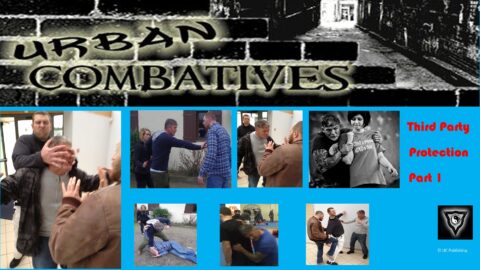
The mindset required for me to protect me is simple enough; this is the instinct of Self Preservation. But the mentality required for me to deal with an aggressive individual who actively seeks to hurt the person I’m with, particularly a significant other carries a very different potential consequence and therefore objective.
That objective lies in making sure that person doesn’t get hurt and gets away from the situation safely. The ideal would be to avoid or de-escalate the problem so we avoid the situation unharmed, but the reality is that life events are often less than ideal this is where some pre-planning for certain events can pay great dividends.
For example the significant people in my life know that if we are somewhere and get a problem with anyone they should ‘get behind me or ideally get away from me totally, either by running to a shop or similar place of safety or to get to the car, whatever, just get clear and let me deal with it!’ as opposed to get in the way or hold on to me in a way that might impair my movement and/or place us both in jeopardy.
Now at least regardless of the outcome to me, whether I take care of the problem quickly and clinically and escape relatively unscathed or worst case scenario even if I get hurt, the person I’m with is at least safe! Now the objective of Third Party Protection has been met! This is why the mentality is different; you are to a certain degree making a sacrifice so that person is protected.
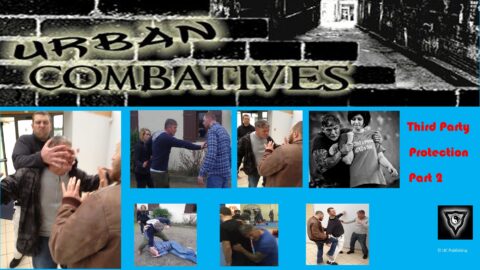
The two key scenarios that relate to Third Party Protection are when you are actually with that person and a potential threat steps out in front of you or when you see someone that you are willing to protect getting verbally or physically assaulted by another person and now you have to encroach from a distance to actively intervene. this program addresses both of these aspects in detail.
This footage was filmed during two International Seminars, One in Dublin the other in Moscow and provides any Combatives trainee or Instructor alike with all of the key principles relating to this module...Enjoy UC 2012
Related Videos

In this program we take our Combative Principles into a workable format on focus pads.
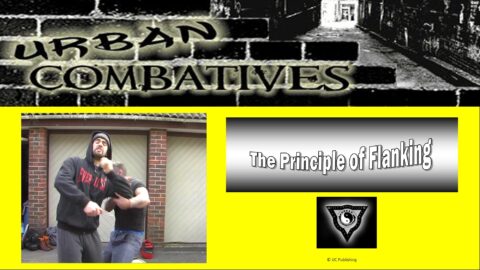
Knowing something or having a true understanding of how a principle works is only complete when you have a kinesthetic way to apply what you know. Here we employ such principles as; closest weapon/nearest target, high/low, cover-crash-counter, indexed-repeated strikes, flanking, branching, stop-hit, blitzkrieg and more with progressively applied pad training. Key points are given on feeding the pads, which is an art in itself as well as simple construction that will quickly take you into the realms of non-compliancy and spontaneity.
This program introduces UC Instructors Simon Grey and Tom Flint as well as 1st generation Instructor Jamie Miller.
This method of training with pads will totally accelerate your combative learning. Lots of key elements and fundamentals getting worked here; tool and impact development, bodyweight transference, understanding range, target-acquisition and transition , state access and management, perception speed, visual cue recognition and immediate spontaneous response.
Enjoy UC 2016
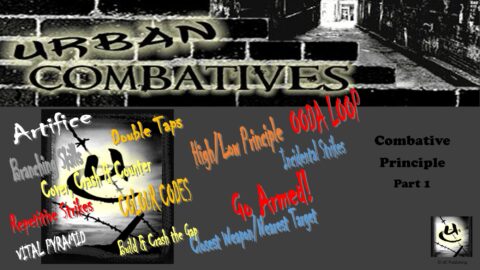
In this two-disc DVD project we take an in-depth look into the key Directives and Principles that drive any good Combative training curriculum or practiced method of Self-Protection and Personal Security.
Techniques and physical skill-sets are secondary to the mentality and concepts that drive them. We all know that any Conflict Resolution begin and end in your head, getting your head right pre-fight, in-fight & post-fight is absolutely essential. Combative perspective and attitude must be in place before the event.
From there if we must use force, then we want the most tactical application of physical force possible; hence our need for directives and principles. These boil down to two key psychological and physical attributes, “Impact with Attitude!”
These are the two key factors that should remain foundational to all forms of Combative efficiency, not this technique or that technique, or this piece of KIT or that piece of KIT; yes we need technical proficiency and yes KIT is useful but without MINDSET and Tactical Application the rest is ‘fluff!’ For the student of Combatives who is lucky enough to have the guidance of a good instructor, the most important priority lies in learning competent, conceptually driven skills, meaning just learn how to do it!
For learning and understanding beyond this point, as well as for instructors looking to install competence in their students; there is now a need to understand the actual how and why something actually works! The nuances of how something comes together to form a successful outcome. This project gives you UC‘s take on the said nuances, absorb and enjoy! LM 2010