
Fight Back part 1

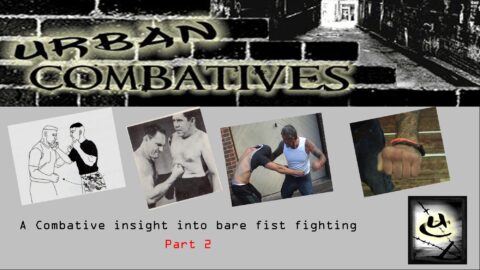
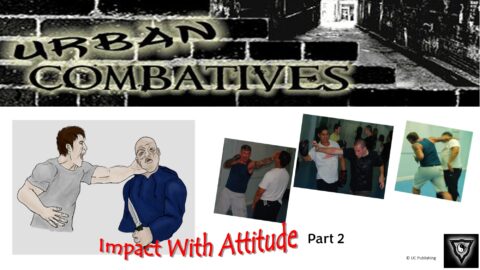
In this program we explore pugilism and the use of the bare-fist for combative dominance in the street.
As practitioners of Combatives training; the closed fist is often frowned upon in favour of the open hand for striking, but the fact is; trained or untrained men punch and have always punched.
Even after many have made the transition to open hands, we will often default back to the addition of punching.
Look at any account of street violence unarmed) and someone, somewhere is getting punched.
We have fought this way for Centuries.
This DVD looks at some of the bare fist methods from the days of the old bare knuckle fighters, who employed closed fist blows in a huge variety of ways; to the Chinese pugilistic influence found within some of the early WW2 Close Combat programs. We also look at figures who have influenced the pugilistic art of using the bare fist such as Daniel Mendoza, Robert Fitzsimmons, to Jack Dempsey and Jack Johnson; right up to some of the USMC and Marine Raiders influence as well as insights into how some of our Great Close Combat forefathers such as Drexel Biddle, John Styers and Charlie Nelson employed the bare fist as an addition to their compressed curriculum.
This program is full of Historical study as well as some workable and street adaptable ideas to employ within your Game Plan should you favour the use of the closed bare fist.
We look into the pros and cons of Punching in terms of the need for specific targeting as well as using the correct areas of the fist for delivering impact whilst striving to minimise injury.
This program will leave you in no doubt to the clinical efficiency of a good puncher; even if you only take this knowledge on board for what to expect the next time you come across such a man!
Enjoy UC 2012
Related Videos
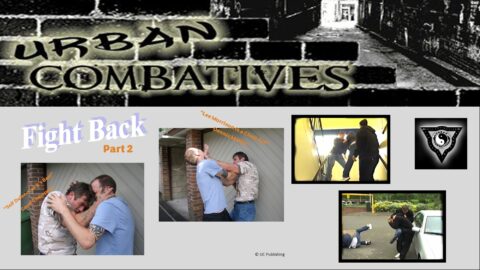
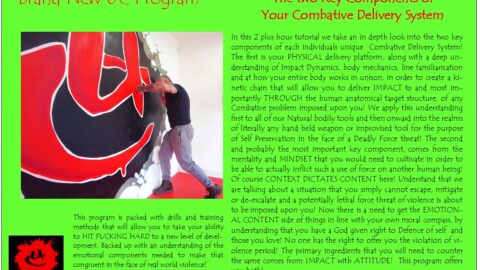
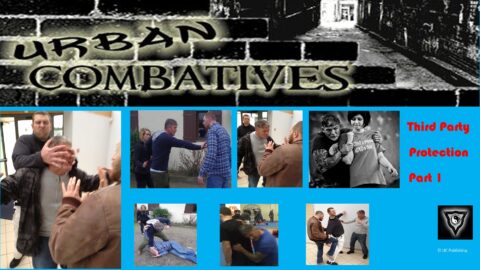
The mindset required for me to protect me is simple enough; this is the instinct of Self Preservation. But the mentality required for me to deal with an aggressive individual who actively seeks to hurt the person I’m with, particularly a significant other carries a very different potential consequence and therefore objective.
That objective lies in making sure that person doesn’t get hurt and gets away from the situation safely. The ideal would be to avoid or de-escalate the problem so we avoid the situation unharmed, but the reality is that life events are often less than ideal this is where some pre-planning for certain events can pay great dividends.
For example the significant people in my life know that if we are somewhere and get a problem with anyone they should ‘get behind me or ideally get away from me totally, either by running to a shop or similar place of safety or to get to the car, whatever, just get clear and let me deal with it!’ as opposed to get in the way or hold on to me in a way that might impair my movement and/or place us both in jeopardy.
Now at least regardless of the outcome to me, whether I take care of the problem quickly and clinically and escape relatively unscathed or worst case scenario even if I get hurt, the person I’m with is at least safe! Now the objective of Third Party Protection has been met! This is why the mentality is different; you are to a certain degree making a sacrifice so that person is protected.
The two key scenarios that relate to Third Party Protection are when you are actually with that person and a potential threat steps out in front of you or when you see someone that you are willing to protect getting verbally or physically assaulted by another person and now you have to encroach from a distance to actively intervene. this program addresses both of these aspects in detail.
This footage was filmed during two International Seminars, One in Dublin the other in Moscow and provides any Combatives trainee or Instructor alike with all of the key principles relating to this module...Enjoy UC 2012
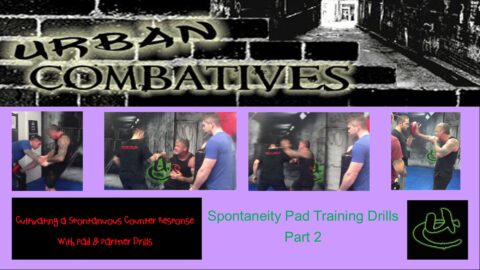
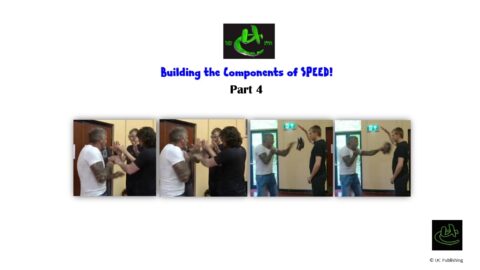
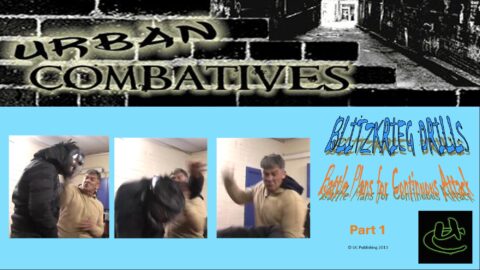
In this 2 disc program, we look at cultivating an Immediate Counter Offensive Spontaneous Response inside of pro-active pad training.
One of many examples might be, you work an offensive skill set for rep time on the pads with a partner then unannounced he will just assault and you have to deal with whatever comes out!
He might be feeding pads one minute then just start blitzing you to see how fast you can pull out your cover or he might Tackle on a low line to work your sprawl. If he feeds one pad, he might pull a weapon and hold up or assault, now your are working Counter Weapons.
We can keep it to one pad feeder and add another random partner to attack.
Any number of unannounced factors can be added to your regular pad training drills allowing you to cultivate the ability to go from the OFFENSIVE to COUNTER~OFFENSIVE and back again within a blink and without thought.
If you really want to know if the Counter Offensive Options will work then you’ve got to work them out of Spontaneity to see if they are really functional or Not!
This program offers a very simple progression towards that end starting with nothing more than pads right up to full on Simulation KIT. This is a great training Conceptual idea for all Combative trainees and instructors alike.
Take this useful Template and create your own drills and enhance your Combative Functionality Tenfold! ...Enjoy UC 2015
In this program we explore pugilism and the use of the bare-fist for combative dominance in the street.
As practitioners of Combatives training; the closed fist is often frowned upon in favour of the open hand for striking, but the fact is; trained or untrained men punch and have always punched.
Even after many have made the transition to open hands, we will often default back to the addition of punching.
Look at any account of street violence unarmed) and someone, somewhere is getting punched.
We have fought this way for Centuries.
This DVD looks at some of the bare fist methods from the days of the old bare knuckle fighters, who employed closed fist blows in a huge variety of ways; to the Chinese pugilistic influence found within some of the early WW2 Close Combat programs. We also look at figures who have influenced the pugilistic art of using the bare fist such as Daniel Mendoza, Robert Fitzsimmons, to Jack Dempsey and Jack Johnson; right up to some of the USMC and Marine Raiders influence as well as insights into how some of our Great Close Combat forefathers such as Drexel Biddle, John Styers and Charlie Nelson employed the bare fist as an addition to their compressed curriculum.
This program is full of Historical study as well as some workable and street adaptable ideas to employ within your Game Plan should you favour the use of the closed bare fist.
We look into the pros and cons of Punching in terms of the need for specific targeting as well as using the correct areas of the fist for delivering impact whilst striving to minimise injury.
This program will leave you in no doubt to the clinical efficiency of a good puncher; even if you only take this knowledge on board for what to expect the next time you come across such a man!
Enjoy UC 2012