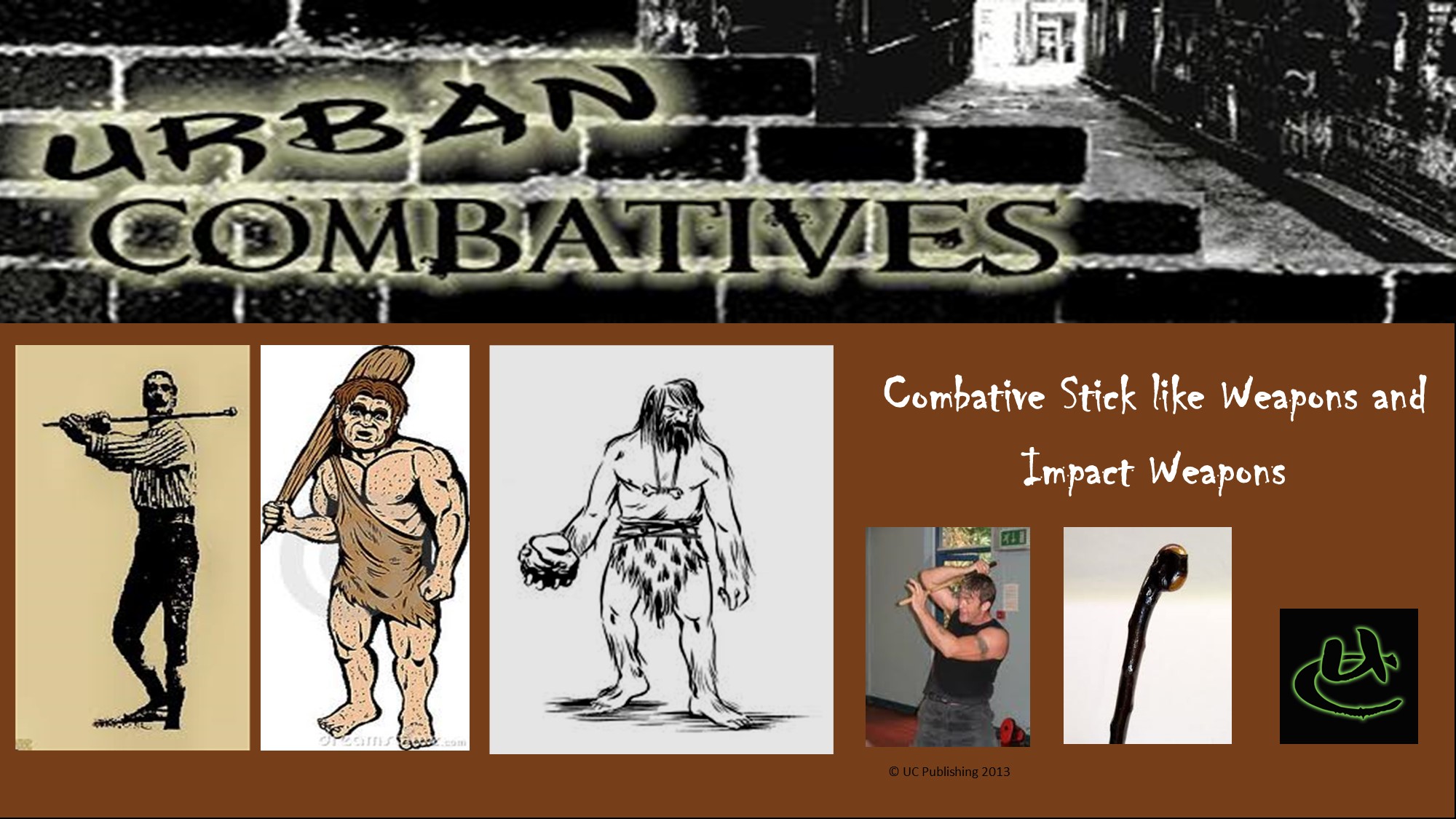
Combative Stick
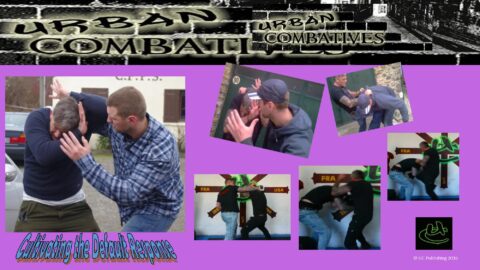
In this program we take an in depth look into the Default Cover position or ‘Startle Guard’ within the context of Counter Offence.
Here I give you progressive drills geared towards cultivating a Spontaneous Default Cover, based on very brief Intel in terms of Pre Threat Cues.
We move to a consistent progression into the Principle of Cover, Crash & Counter. The Default Cover is our primary non-diagnostic response to a variety of unarmed punching assaults that often come out of ambush or are simply caught late, offering the briefest of body language cues.
Further drills take us into the realms of Impact Inoculation. Employing graduated progressions, allowing you the chance to get comfortable with what most people feel uncomfortable with, ‘getting fucking Hit!’
This kind of training will take your confidence to a new level and allow you to focus effectively on dealing with an aggressive subject that got the jump on you!
You will learn that you CAN dominate quickly and clinically and put an end to the problem!
Enjoy UC 2016
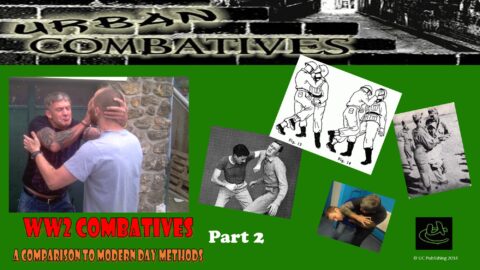
In this program we look at a comparison between the unarmed Combatives taught during the WW2 period compared to that of modern day Combative training.
Here We look at the kind of people that were learning for operational purposes and more importantly at some of the key figures that taught it during the war years.
For this we look to what was taught primarily in the UK and in the US. FROM THE British Commando /Auxiliary & s.o.e periods influenced by W.E. Fairbairn & E.A. Sykes.
To Dermot Pat O’Neil & John Jasper Styers of the US Army & US Marine Corp. WE also look AT THE Commonalties THAT Remain A CONSTANT TODAY FOR ANY WORTHY Combatives curriculum such as principle based methods, compressed curriculum and mentality driven emphasis.
Quite often the unarmed combat module of training constituted no more than 3 percent of the overall learning that some of these soldiers and operatives had to undertake, no more than a matter of hours, to learn something that could save your life or buy you time to get to a weapon before being sent to occupied territory where what you had learned ‘had to work’ or you wouldn't make it home!
This program is for historical study but also takes in to account the differing rules of engagement compared to today’s need for civilian self-protection and at what we have taken and continue to employ from the influence some of our close combat forefathers! enjoy UC 2014